
- Ten is arguably the ideal age for a treasure hunt: fluent readers, real stamina, and old enough for genuinely tricky puzzles. Plan 8–12 clues over 60–90 minutes.
- Attention holds up to 60 minutes, and they now handle abstract thinking — metaphors, multi-step logic, harder ciphers — so you can finally stretch them.
- Wrap it in a story with stakes (a heist, a lost map, a detective case). At ten, the narrative is what turns a hunt from “fine” into “unforgettable.”
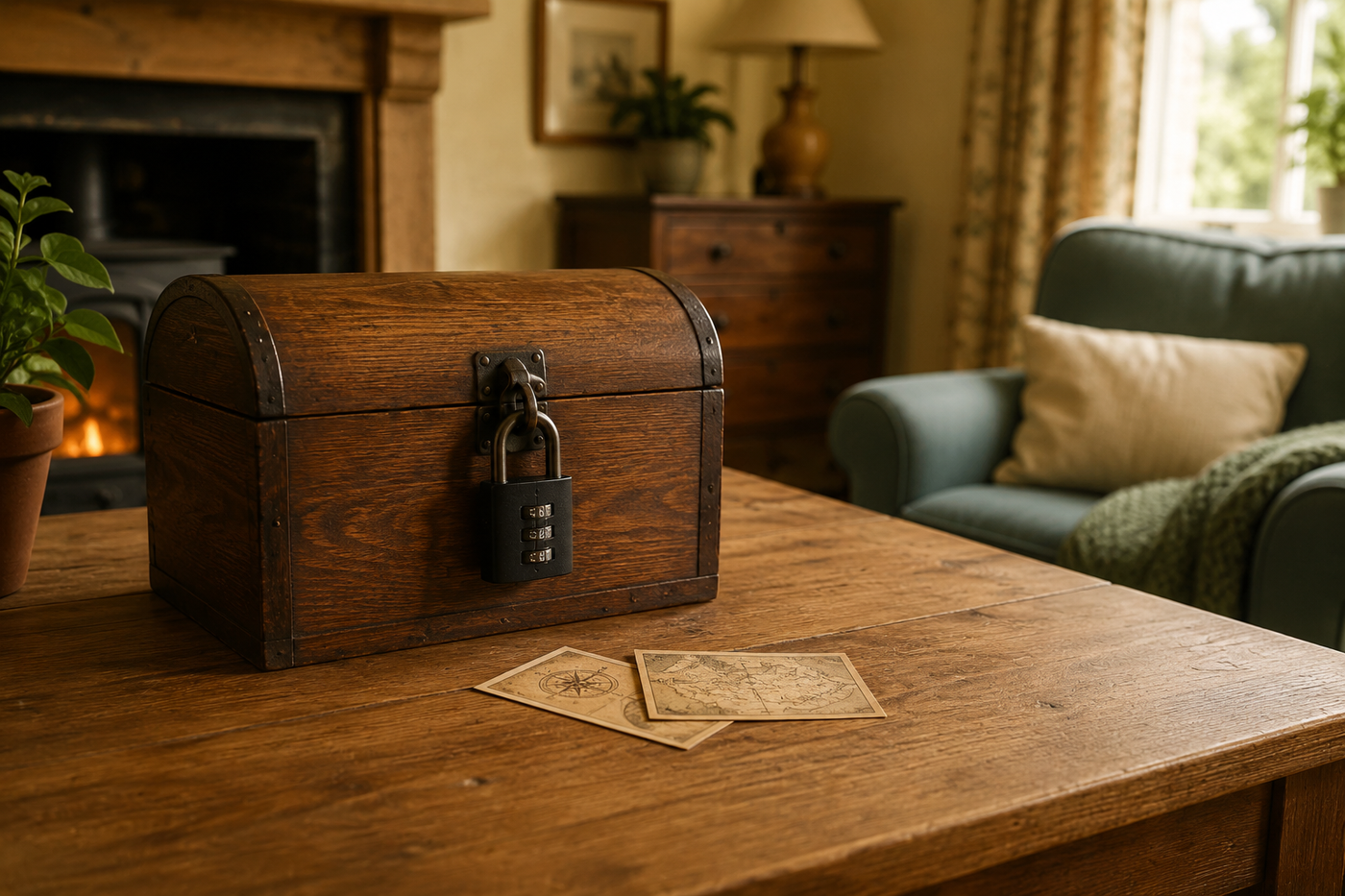
- Layer a proper cipher progression — Caesar shift, Atbash, a two-step puzzle — and add a combination-locked box as the finale.
- They can roam the neighbourhood in small teams, and love competitive relays with roles and scoring. Tech (QR codes, photo challenges) feels modern and cool.
Why 10 Is the Ideal Age for a Treasure Hunt
If there’s a perfect age for this, it’s ten. A treasure hunt for 10 year olds can be everything at once: fluent reading, the stamina for a proper 60–90 minute adventure, and — the big shift — the ability to think abstractly. Ten-year-olds handle metaphors, plan several steps ahead, and crack trickier ciphers with real satisfaction. Give them 8–12 clues and make them genuinely challenging.
They’re also at that age where they’ve started to feel “too old” for kids’ stuff — which is exactly why a hunt with real codes, a story and some stakes lands so well. It feels mature enough to be cool. The one thing that ruins it? Clues that are too easy. A bored ten-year-old checks out faster than a confused five-year-old, so err on the side of harder and keep hint cards handy.
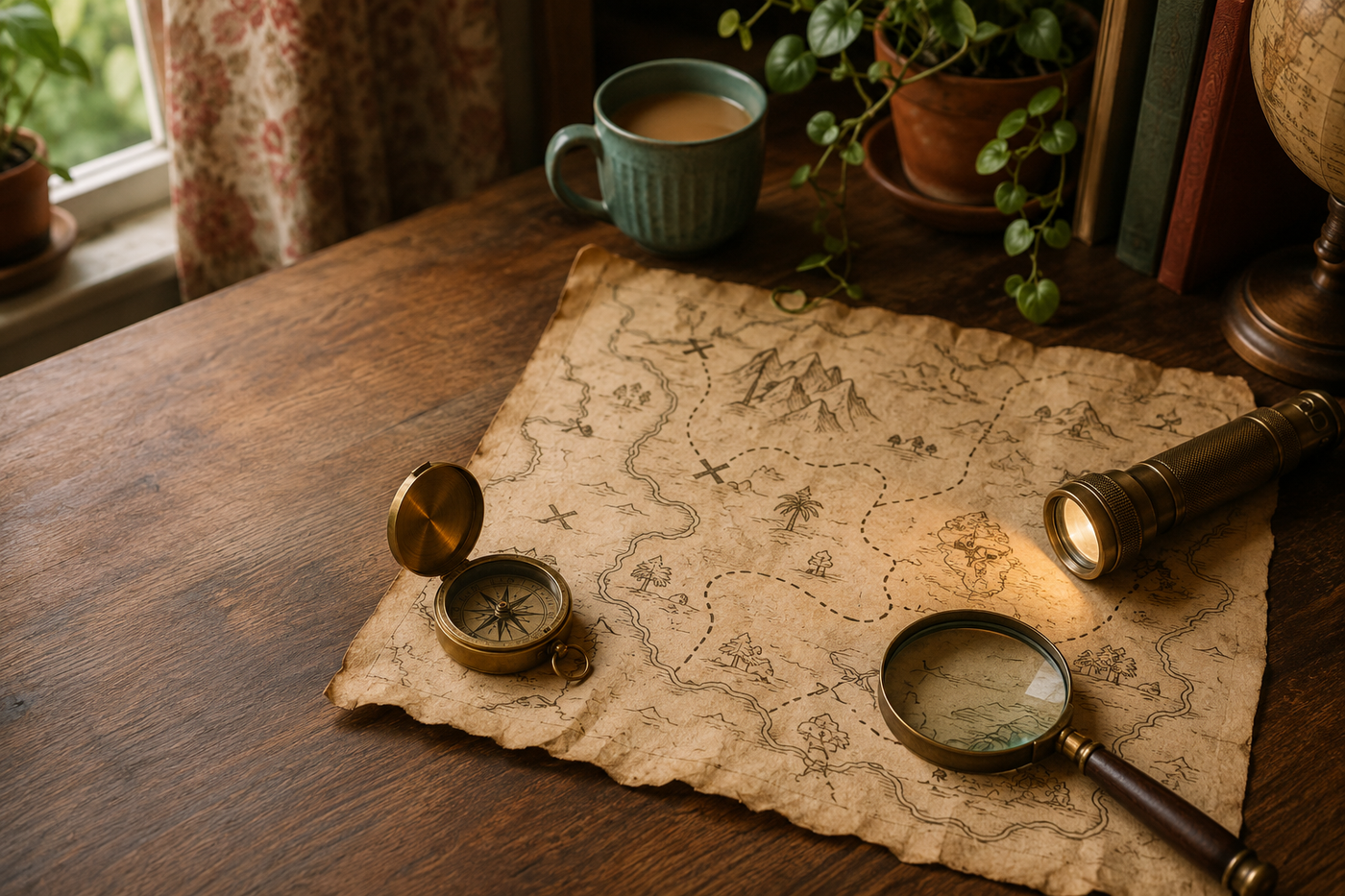
Story-Driven Hunts & a Real Cipher Progression
Two things make a ten-year-old’s hunt sing: a storyline and a rising difficulty curve. Don’t just list codes — take them on a journey where each cipher is a little harder than the last.
- Start accessible: a Caesar shift or number code with a key.
- Build the middle: Atbash (A=Z), a rebus, a two-step clue where one answer feeds the next.
- Finish hard: a combination-locked box where the numbers come from clues solved along the way.
- Thread the story through: a captain’s diary, a spy’s dossier, a detective’s case notes — each clue a “page.”
Our secret codes for treasure hunts guide has every cipher, and escape room party at home shows how to chain them into a mission.
Grab our Cipher Quest Clue Cards for 10-Year-Olds (PDF) — six ciphers and riddles with a rising difficulty curve (answers included), a how-to and a certificate. Print, cut, hide.
6 Clues & Ciphers for 10 Year Olds (With Answers)
A rising curve — copy and adapt:
- Caesar shift (back 3): “G-H-V-N” → DESK
- Two-step: “Work out 7 × 8, then find the book on the shelf whose number is the last digit.” → 56 → shelf 6
- Riddle: “I have a spine but no bones, hundreds of leaves but no tree.” → a book
- Atbash (A=Z): “K-O-Z-M-G” → PLANT
- Lateral riddle: “The more you take, the more you leave behind. What am I?” → footsteps (follow them to the door)
- Final clue: “The prize is locked — the combination is the number of steps to your front door.” → count the steps
Tech & QR-Code Treasure Hunts
Ten-year-olds are tech-native, and a bit of technology makes a hunt feel current rather than something from a party twenty years ago:
- QR codes: generate free QR codes that link to the next riddle, a photo clue, or a short video message. Print and hide them like any clue.
- Photo challenges: “take a team selfie at the postbox to unlock the next clue.”
- Text-message check-ins for neighbourhood legs, so you always know where teams are.
Keep phones to one shared device per team, and use tech as a garnish — the puzzles still carry the hunt.
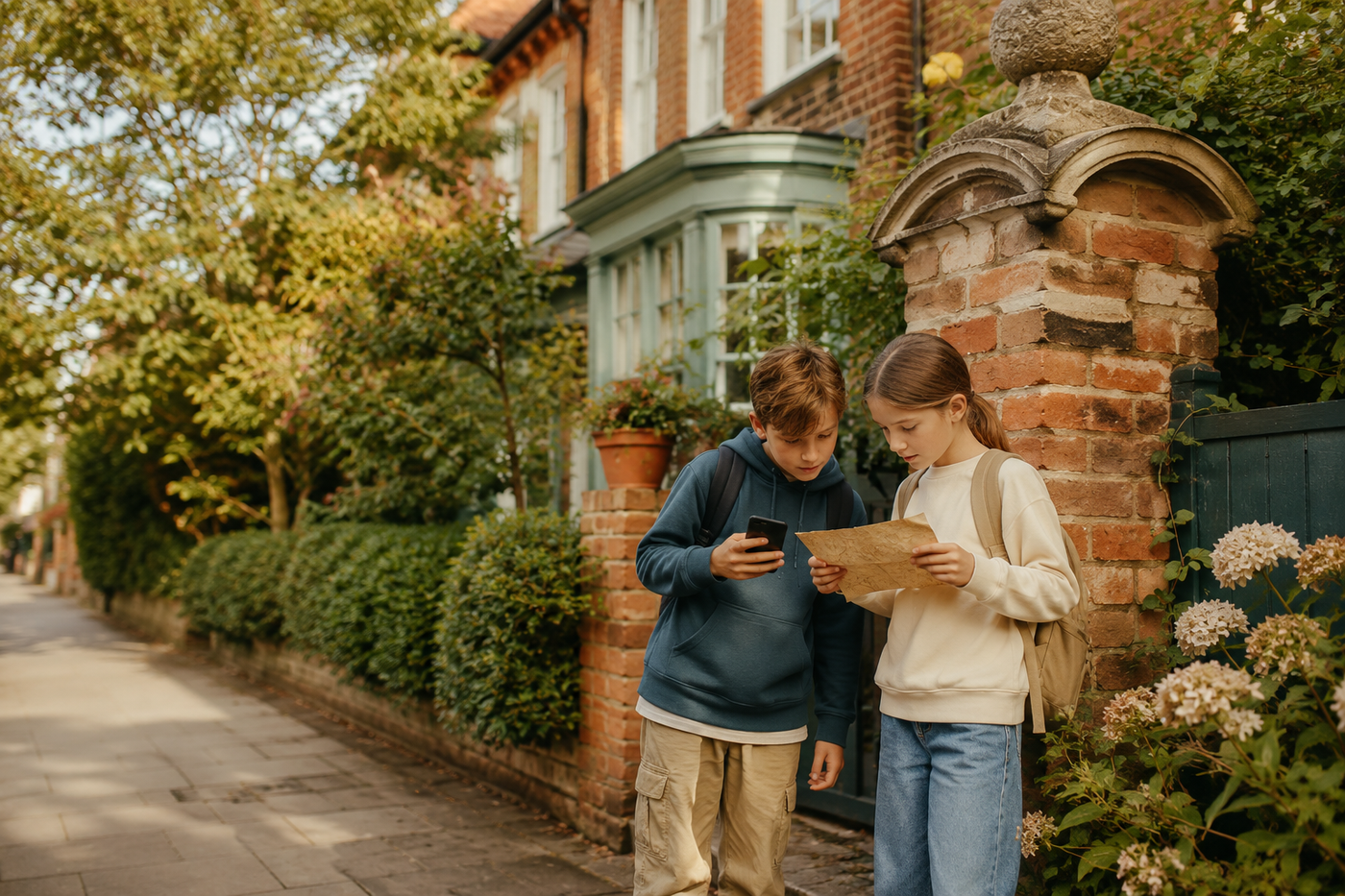
Neighbourhood Hunts & Team Relays
Ten-year-olds love competition — channelled well, it’s brilliant. Run a team relay: two or three teams, each with roles (code-breaker, navigator, runner), racing the same clue chain with a points score. For neighbourhood hunts, keep boundaries clear, check-in points frequent, and teams together. Landmark clues only — never anything that sends them across a road. Our outdoor treasure hunt ideas has the formats.
How Long Should It Be, and How Many Clues?
| What | The sweet spot for a 10 year old |
|---|---|
| Number of clues/stops | 8–12 |
| Total hunt length | 60–90 minutes |
| Attention span to plan around | ~60 minutes of focus |
| Clue type | Cipher progression, two-step puzzles, QR codes |
| Hiding difficulty | Medium–hard (make them think) |
| Treasure | A combination-locked box, a decent prize, a gadget |
- Clues too easy: A bored ten checks out fast. Fix: err harder; let them ask for hints.
- No story: A code list feels flat. Fix: a heist, a case, a lost map with pages.
- Flat difficulty: Same-level clues bore. Fix: a rising cipher curve, hardest last.
- Tech that overshadows puzzles: Gimmicks pall. Fix: use QR as a garnish; puzzles carry it.
- Unstructured neighbourhood roaming: Risky. Fix: boundaries, check-ins, landmark clues, teams together.
Ready-made Quest Box hunts for 10-year-olds
Prefer it done for you? Every Quest Box hunt is a complete, story-driven adventure — characters, themed clues and lovely design, built to fill 60–120 minutes and ready to print at home in minutes.
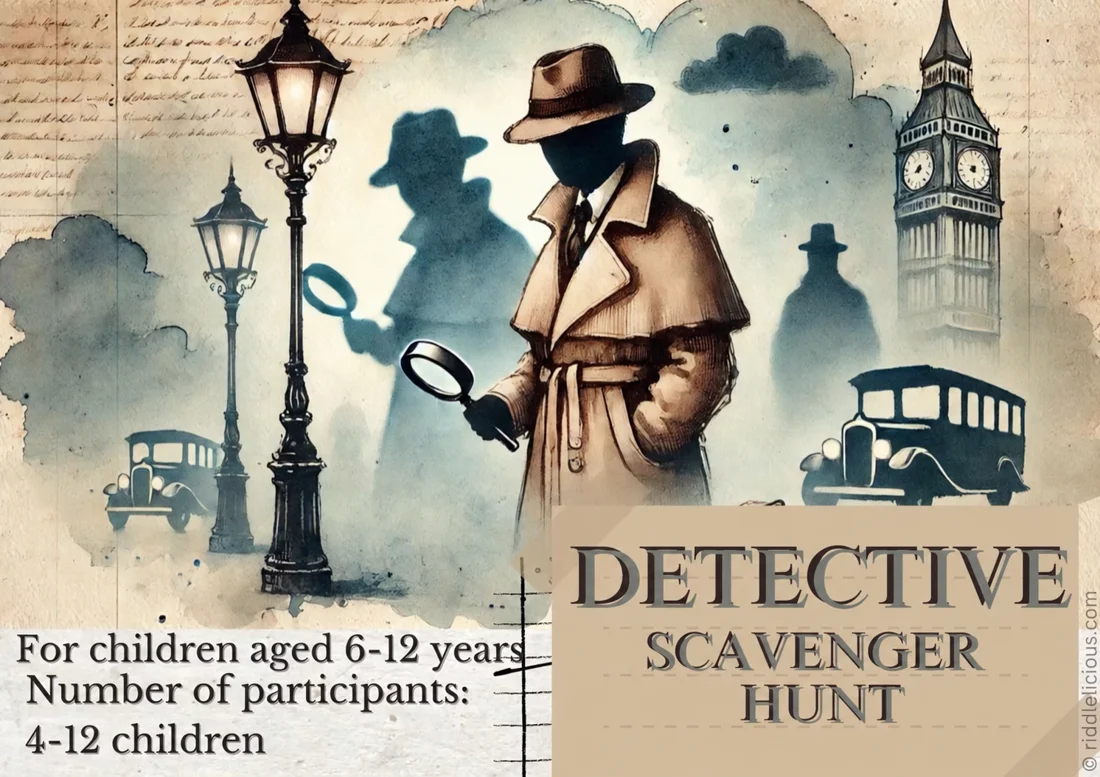
 Detective Treasure HuntA crack-the-case detective hunt — clues, suspects and a mystery to solve.View the hunt · £12.99 →
 Egypt Treasure HuntAn ancient-Egypt expedition with hieroglyph codes and a pharaoh’s treasure.View the hunt · £12.99 →
 Magic & Wizards Treasure HuntA spellbinding wizards-and-magic quest full of tricks and puzzles.View the hunt · £12.99 →
Want more brain-teasers for this age? Try our riddles for 10 year olds — 40 tricky riddles with answers.
Frequently asked questions
What treasure hunt clues are good for a 10 year old?
How many clues should a 10 year old’s treasure hunt have?
How do I make a QR-code treasure hunt?
Are 10 year olds too old for treasure hunts?
How do I run a competitive team treasure hunt for 10 year olds?
How long should a treasure hunt last for a 10 year old?
Ten is the age to go all in — a real story, a rising cipher curve, a team relay and a locked box to crack. Pitch it harder than you think, let them earn the hints, and you’ll get a hunt they talk about for months. Next up: our treasure hunt for 11 year olds, or back to the treasure hunt for 9 year olds. The full treasure hunt ideas by age guide maps every age.
Written and play-tested by Hannah — a Yorkshire mum of two and former primary-school teaching assistant. Last reviewed July 2026.
Hannah is the mum behind Riddlelicious — a former primary-school teaching assistant who tests every printable hunt on her own two before it reaches the shop.