
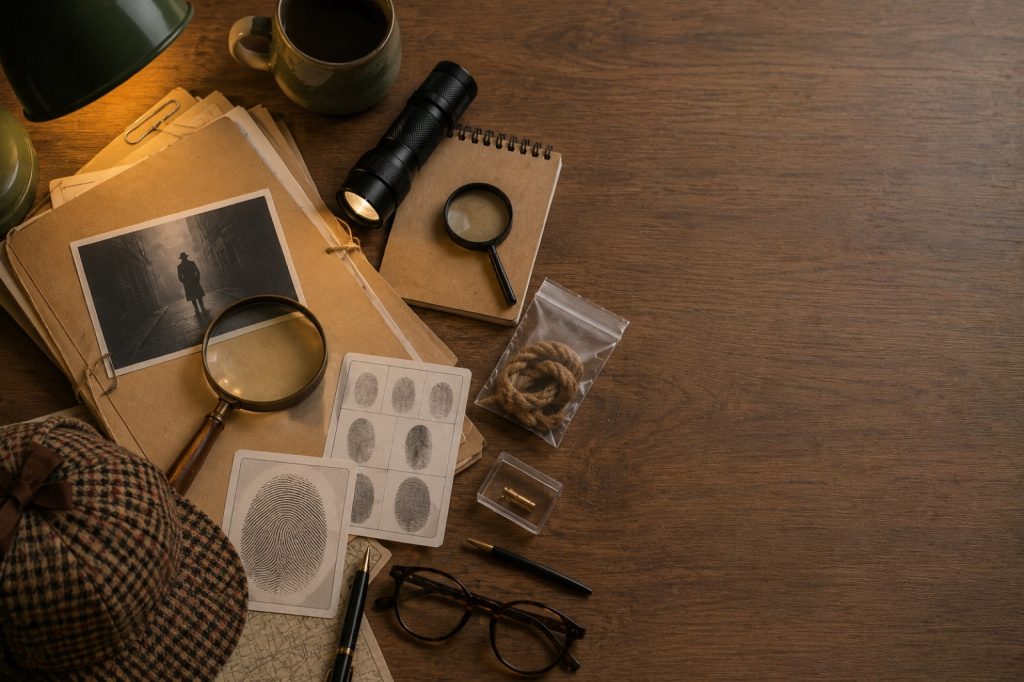

- Frame the mystery around something playful: a stolen item, missing character, or puzzle to solve—never dark or scary. Kids aged 8–13 thrive with this format.
- Assign every child a role: detective (or detective team), suspects with alibis, witnesses, and sidekicks. Even non-readers can be witnesses and contribute through interviews.
- Build a clue trail using written cards, physical evidence (fingerprints, footprints, torn fabric), and interview scripts so suspects give consistent stories.
- A typical 2-hour party flows: 10 min welcome + story, 35 min clue hunt + investigation, 20 min suspect interviews, 10 min deliberation, 5 min big reveal, 40 min cake and celebration.
- Test clue difficulty beforehand. What’s obvious to you may confuse everyone else; adjust complexity and hiding spots accordingly.
Why kids love a mystery party · Choosing your mystery story · Assigning character roles · Building your clue trail · Pacing your mystery party · Handling common party mishaps · Age-specific adjustments · DIY clue kit vs. printable shortcuts · Making it feel real · The setup checklist · The big reveal and celebration · Frequently asked questions
A murder mystery party for kids is a brilliant way to turn an ordinary birthday or Saturday afternoon into an unforgettable adventure. Unlike adult versions (no gore, no dark twists), a kids’ mystery party is really a “whodunnit” with a missing pet, stolen treasure, or mystery object. You set a story, assign character roles, plant clues around your home or garden, and let the children work together as detectives to solve the puzzle. It works beautifully for ages 8–13, though you can adapt it for younger or older groups. The best bit? You don’t need a kit or hours of prep—though we’ve built a shortcut if chaos is calling.
Why Kids Love a Mystery Party
After roughly a hundred themed parties between our house and friends’ celebrations, I’ve learned that kids don’t want to sit still reciting worksheets. They want to become someone. A mystery party ticks every box: it’s active (they’re moving, searching, interviewing suspects), it’s collaborative (nobody’s sitting out), it builds genuine suspense, and it gives shy children a reason to speak up.
Oscar, who’s usually “too cool” for anything Mum suggests, was genuinely gripped when we hid clues around the kitchen and gave him a detective clipboard. Lily—who’s only five—loved being a “witness” in fancy dress, even though she couldn’t read the clues. The detective role gave her purpose and a script to follow, so she wasn’t lost or bored.

Choosing Your Mystery Story
The magic starts with the story. Forget gruesome murder scenes—instead, frame the mystery as:
- A stolen item: The birthday cake has gone missing, or someone’s nicked the pirate‘s treasure map.
- A missing character: The Easter Bunny’s vanished, or the royal crown has disappeared.
- A puzzle to solve: A secret code needs cracking, or a locked box requires the right key.
The theme should match your guests’ interests. A dinosaur-themed mystery works for 8-year-olds; an escape-room-style detective case suits 11–13 year-olds. Keep the stakes simple and playful—nobody’s worried about genuine danger, but they’re invested in finding out “whodunnit.”
Pro tip: set the story around something visual and fun. One party involved a “stolen crown” with gold cardboard pieces hidden around the lounge. Another had a fake ransom note for a stuffed elephant. The visual element keeps younger children engaged even if they can’t read every clue.
Assigning Character Roles
This is where you give every child ownership. Hand out simple character sheets (print or write them on cards) describing who they are and what they know. Sample roles:
- The Detective: Leads the investigation and interviews suspects.
- Suspects (3–4 children): Each has a motive, an alibi, and one false clue to drop. One of them is the “culprit” (though they may not know it until the reveal).
- Witnesses: They saw something odd and can offer hints if asked.
- The Sidekick: Helps the detective collect evidence and keep notes.
Print or handwrite these on colourful cardboard so children feel official. Let them know: suspects should tell slight variations of the story, and witnesses might forget details (it makes the game more realistic). Younger kids (5–7) do better with just two roles: “Detective” and “Suspect” or “Witness.”
Building Your Clue Trail
Here’s where most how-to guides get vague. Let me give you concrete examples of clues that actually work for kids.
Written Clues (Best for Ages 8+)
Write clues on colourful card or paper, hinting at the next location or the identity of the suspect:
- Direct clue: “Someone was wearing red shoes. Check the photos on the mantelpiece.”
- Riddle-style: “I’m hot and black, you drink from me. Look under the kitchen ___ to find the next key.” (Answer: mug. Clue is taped under the kitchen table.)
- Numbered list: “The culprit was seen: 1) Near the garden shed, 2) At 2 p.m., 3) Carrying a red bag.” Kids cross off each item as they interview suspects.
For non-confident readers, pair written clues with pictures. A simple drawing of a shoe plus the word “SHOE” pointing to the next hiding spot works just as well as a paragraph.
Physical Evidence (Works for All Ages)
Kids love holding tangible clues. Consider:
- A fingerprint card (make one with washable ink pads)—children ink their fingers and compare to a “suspect’s” prints hidden near clues.
- Footprints cut from cardboard, labelled with a shoe size and left in the “crime scene” (your lounge or garden).
- A coded message using a simple cipher (e.g., A=1, B=2, etc.)—detective sheet included so they can decode it.
- A “ransom note” made from cut-up magazine letters, glued onto card.
- A torn piece of fabric or a button pinned near a suspect’s photo—”evidence” they dropped.
Interview Clues (The Game-Changer)
This is where kids really shine. Each suspect has a scripted answer to detective questions. Write them down on cards so suspects don’t forget:
Detective asks: “Where were you at 2 p.m.?”
- Suspect 1 (innocent): “I was in the garden watering the plants.”
- Suspect 2 (the culprit, but lying): “I was in the kitchen making a sandwich. I didn’t go anywhere near the [stolen item]!”
- Suspect 3 (innocent but nervous): “I… I was hiding in the shed because I wanted to be alone. I didn’t see anything.”
The detective’s job is to notice who’s being evasive or whose stories don’t match. This teaches real investigative thinking and keeps everyone talking.
Pacing Your Mystery Party
Timing makes or breaks the event. Here’s a realistic schedule for a 2-hour party with 6–8 kids, ages 8–11:
| Time | Activity | Notes |
|---|---|---|
| 0:00–0:10 | Welcome & Story Setup | Gather kids, read the mystery scenario aloud, hand out character sheets. Keep it dramatic but brief. |
| 0:10–0:15 | Kids Read Roles & Ask Questions | Let them settle into their character. Suspects should know their alibis cold. |
| 0:15–0:50 | Clue Hunt & Investigation | Detective and sidekick search for clues while suspects stay in a designated “room.” Rotate so suspects get a turn investigating too (optional but fair). |
| 0:50–1:10 | Suspect Interviews | Detective calls suspects one by one (or in pairs) and asks questions. Let this breathe—it’s the fun bit. |
| 1:10–1:20 | Deliberation | Detective team has 10 minutes to review notes and decide who the culprit is. |
| 1:20–1:25 | The Big Reveal | Detective announces their suspect. Culprit “confesses.” Everyone celebrates. |
| 1:25–2:00 | Party Time | Cake, prizes, debrief (“Did anyone figure it out before the end?”). |
Adjust based on age: 6–7 year-olds need shorter clue hunts (25 min max) and simpler interviews. 11–13 year-olds can handle 45 minutes of investigation if you’ve layered the clues well.
Handling Common Party Mishaps
Real talk: something will go wrong. Here’s what to do.
The Clues Are Too Hard (Or Too Easy)
If kids are stuck after 15 minutes, step in as a “mysterious voice” (telephone call, note, town crier character) offering a hint. If they solve it in five minutes, don’t panic—they can start interrogating suspects earlier than planned, or you can add a “bonus round” with extra clues they missed.
One Child Gets All the Attention
Prevent this by making roles equal: rotate the detective role halfway through, or have two detectives working together. Ensure witnesses get asked questions too, not just suspects.
Someone’s Upset or Lost Interest
Have a backup activity ready (colouring sheets, a simpler treasure hunt). If a child is genuinely distressed by the competitive element, let them switch to a “helper” role (they keep the official clue log or time the interviews).
The Culprit Was Obvious Too Early
If one suspect is clearly guilty 20 minutes in, add false clues that point to someone else temporarily. Misdirection is your friend—leave a red herring clue that initially seems damning but has an innocent explanation.
Age-Specific Adjustments
Ages 5–7 (Pre-Readers & Early Readers)
Keep it simple: one detective, one suspect, obvious clues. Use pictures heavily (draw the location on a card, not words). Interviews should be quick Q&A, not lengthy interrogations. A “mystery” might be: “Who hid the teddy bear?” with clues like pictures of rooms and the culprit’s photo hidden near each one.
Ages 8–10 (Confident Readers)
This is the sweet spot. Kids can read clues, handle multiple suspects, and enjoy misdirection. Use riddles, coded messages, and simple fingerprinting. Two-person detective teams work well so nobody feels overwhelmed.
Ages 11–13 (Advanced Detectives)
Crank up complexity: multiple clues at each location, contradictory witness statements, a two-part mystery (first: find the item, second: prove who took it), or a “red herring” suspect who looks guilty but isn’t. Let them take notes and feel like real investigators.
DIY Clue Kit vs. Printable Shortcuts
You can absolutely build a mystery from scratch using stuff at home: pen and paper, kitchen items, old clothes. Costs nothing, feels personal, and teaches you exactly what works. Character sheets, clue cards, and a simple timeline are all you need.
If you’re short on time (or energy), a ready-made printable mystery kit cuts the work to about 20 minutes of printing and hiding. It includes character sheets, clue cards, and a detective worksheet—all you do is print, assign roles, and let kids loose.
Making It Feel Real
The atmosphere sells the mystery. Small touches transform a lounge into a crime scene:
- Dim the lights or use a single torch.
- Play quiet background music (streaming services have “mystery” playlists).
- Give detectives a clipboard and pen to take notes.
- Wear a costume yourself—even a fake badge or detective’s hat sets the tone.
- Use proper character language: “Report to the police station [your kitchen] if you find evidence.”
You don’t need fancy props. One birthday used a gold scarf as “treasure” and cardboard boxes as “crime scene markers.” Kids accepted the world we’d built because we took it seriously, even playfully.
The Setup Checklist
Before guests arrive, have ready:
- Character sheets (printed or handwritten), one per child.
- Clue cards, hidden in their designated spots (test the hiding spots work—juice stains have ruined many a clue card).
- Interview scripts for each suspect (so they don’t forget their alibi halfway through).
- Detective worksheet or notebook (helps kids track clues and stay focused).
- Backup clues or hints (just in case the main trail stalls).
- A “confession” moment plan (how will the culprit be revealed? A dramatic entrance, a written letter, a big reveal in the garden?).
The Big Reveal & Celebration
How the mystery ends is as important as how it starts. When the detective announces their suspect (usually the actual culprit, but sometimes they get it wrong—that’s fine), let the accused dramatically “confess” or “deny it!” in character. This is the moment for applause, photos, and celebrating. Then move straight to cake and a fun debrief: “Did anyone guess who it was? What was your favourite clue?”
You might award a small prize to the winning detective team (a chocolate coin, a sticker sheet) or give everyone a “Detective Badge” certificate to make it fair. The prize itself matters far less than the story—kids remember solving the puzzle and feeling clever.
Frequently asked questions
What age is too young for a murder mystery party?
Can kids play a mystery party if they can’t read well?
How long does a kids’ detective party take?
Do you need lots of kids to play a mystery party?
Can adults join a kids’ murder mystery party?
How do I make sure the mystery isn’t too scary for kids?
Written and play-tested by Hannah — a Yorkshire mum of two and former primary-school teaching assistant. Last reviewed June 2026.
🗺️ Ready-made hunts you can print tonight


Hannah is the mum behind Riddlelicious — a former primary-school teaching assistant who tests every printable hunt on her own two before it reaches the shop.


